
Episode Overview
Most guests on this show build the project. Steve Adler is the one who had to get it voted on. He came to Austin for the cheapest law school in the country, spent 30 years in eminent domain and civil rights law, eight as chief of staff in the Texas Senate, and in 2015 became mayor of a city that had refused rail twice and had spent two decades not building. In November 2020, in the middle of COVID, 58% of Austin voters approved Project Connect: a city property tax increase of almost 20% to fund light rail and bus rapid transit, structured as a permanent levy rather than a bond. This episode is the governance side of a megaproject, told by the person accountable for it: the whole-system map, six years of groundwork, the technocratic body that bought the chamber’s support, the levy that survived the cost explosion, the contract with voters at 5% design, and the overrun numbers that reached City Hall late.
Show the whole system, then fund it to survive
A 2014 map of a short first phase lost because 98% of the city could not find itself on it; the Washington Metro map he grew up with showed every neighborhood a station, even 40 years out. And a vote for an annual levy, not a fixed bond, is why Austin’s program lived through a cost spike that killed voter-approved projects elsewhere: “It might just take us 15 more years.”
Courtroom, Capitol, City Hall, campus
Born and raised in Washington, DC, then Princeton, then the University of Texas law school for $120 a semester. Three decades representing landowners in eminent domain cases, eight years running a state senator’s office, eight years as mayor of a city that went from the 44th largest in the country to the 10th. Now teaching on three Austin campuses, with a memoir, Hot Seat, Hot City, out this August.
Write the contract. Ask when the room knew.
Two things from the episode you can do on any program: put what you know and do not know at 5% design in writing, with what happens if the money falls short (Austin’s council passed it as a “contract with the voters”); and find out how long bad cost news sat with the engineers before it reached the people who speak for the project. Adler would have taken it “six months earlier, eight months earlier.”
A written companion to the released episode. Quotes are transcribed from the published audio and lightly condensed for readability (false starts and fillers removed, meaning untouched); timestamps link to the moment on YouTube and are approximate (~M:SS). Vote results and dates are checked against the public record where the brief states them as facts; figures Steve cites from memory on air are marked as cited on the show. Biographical facts come from the on-air introduction, his LinkedIn profile, his own site and his publisher’s page. Steve speaks in a personal capacity, not for the City of Austin or any institution he teaches at.
Inside the Episode
One conversation, four acts. Act I is the road in and what the voters actually said yes to. Act II is the twenty years of no: the 2000 vote that lost by a hair, the Red Line, the 2014 plan that died on the front page, and the Metro map Steve carried from his childhood in Washington, DC. Act III is how the yes got built: six years of meetings, the design decisions made for the ballot, and the Austin Transit Partnership. Act IV is what happened after the vote: the cost explosion the levy survived, the contract with voters, the shrinking scope, the numbers that arrived late, and the advice he gives mayors, engineers and students.
“There is no such thing as an engineering solution that does not include politics, just as there’s no correct political choice that does not hold on to engineering constraints and opportunities.” Steve, at ~57:10 · and “I wish I had gotten that information six months earlier, eight months earlier, because it could have changed the way that I talked about the future of the project.” at ~45:00
The last chapter is the longest stretch (18 minutes: advice for mayors, engineers and students, the people he follows, and the book). The campaign chapters in Act III are the densest; the twenty years of no are told in under six minutes.
The Road In: DC to Austin on a $100 Scholarship
Born in Washington, DC, a Princeton degree, and the cheapest law school in the country. How a $100 scholarship made a Texan, and why a city that grew from 44th to 10th largest spent two decades not building.
What Austin Said Yes To
The 2020 vote in plain terms: a property tax increase of almost 20% at the city level, light rail plus bus rapid transit, and a levy that pays to run the system, not just to build it.
Twenty Years of No: 2000, the Red Line, 2014
A rail plan that lost by a hair and never came back, the Red Line bought because it was cheap and built where the riders were not, and a 2014 plan that died on the front page of the newspaper.
The Metro Map Lesson
A memory of the first Washington Metro map, where everyone could find themselves even if their station was 40 years out. The engineer’s answer to what the voters would approve, and a promise made in a losing year.
Six Years of Groundwork
Thousands of community meetings, a bus agency rebuilding goodwill before the vote, a booster group modeled on Denver, two lessons from Nashville, and 58% in the first COVID November.
Designing for the Vote: Chamber, Equity and the Big Number
Why the glide path to the ballot starts at the first engineering meeting, what the affordable-housing question does to a route, and the counterintuitive lesson of the $80 million bond that failed and the $720 million one that passed.
The Third Leg: Austin Transit Partnership
The chamber would not back a council-run $7 billion program, so a five-person technocratic body got the money and the contracts. What that bought, and what it costs in visibility.
Costs Explode, the Levy Holds, and the Contract with Voters
Glass up 800%, bond-funded projects canceled around the country, and why an annual levy survived where a fixed sum would not. Then the 5% design dilemma and the contract the council passed with the voters.
Holding the Coalition When the Scope Shrinks
The base reasons still hold when the tunnel and the airport line go; the people who wanted an underground mall do not. Engineers and politicians, locked in a room.
The Numbers Came Late
Overruns the engineers knew about months before City Hall did, what the delay cost, cost per mile and why it runs high here, and a dinner in China that explained something about eminent domain.
Trust, Advice and the Book
Advice for mayors (trust, and decide deliberately), for engineers (there is no engineering solution without politics), for students (decide what matters), the people he follows, and Hot Seat, Hot City.
The Guest · Steve Adler
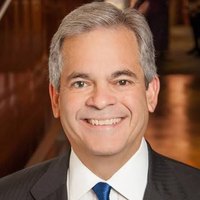
Steve came to Austin for the cheapest law school in the country and never left. For 30 years he practised eminent domain and civil rights law at the firm he co-founded, Barron & Adler, and for eight of those years he was also chief of staff and general counsel to a Texas state senator. He was elected mayor of Austin in December 2014 and served two terms, from January 2015 to January 2023, the years in which the city went from a council that would not spend on infrastructure to a $720 million mobility bond, a bond election every two years, and, in November 2020, the $7.1 billion Project Connect transit vote. He now teaches on three campuses (the LBJ School at the University of Texas, Huston-Tillotson University and St. Edward’s University), practises with Fritz Byrne, and in August 2026 published Hot Seat, Hot City: The Austin Mayor’s Story. In Orion’s words, “a rare four-angle guest”: academic, courtroom, Capitol and City Hall.
“There is no such thing as an engineering solution that does not include politics, just as there’s no correct political choice that does not hold on to engineering constraints and opportunities.”Steve Adler · on the show, ~57:10
The road, as he tells it
“I was born in Washington DC, actually in the city. And that’s where I grew up.” Princeton came next, and so did a memory that turns up 12 minutes into the episode: the first drawings of Metro, a complete system where “everybody was okay with that, so long as that map showed that they were at least part of the design.”
“I came down to Austin and to Texas to go to law school because this was the cheapest law school in the country, and I could afford it.” The $100 scholarship bought in-state status: “tuition was $8 an hour, 15-hour semester, cost me 120 bucks.”
“I came here with no intention of staying. But something funny happened in my time in Austin. I fell in love with the breakfast tacos and the music. You could tell it was a city that was going to grow.”
Thirty years of eminent domain and civil rights work at the firm he co-founded, and eight years as chief of staff and general counsel to State Senator Eliot Shapleigh. The eminent domain years surface late in the episode, in a dinner in China and a question he still thinks about: “What happens to you if you win?”
“When I became mayor, infrastructure investment was one of the highest priorities.” A promise made while running in 2014, kept “two years into my second term”: a transit plan the city would actually vote for.
“I am so energized and excited by the interactions I have with students. And I’m on three campuses. All student bodies different, but all equally hope-building.” The book, Hot Seat, Hot City, is “about my eight years in office,” one hard issue per chapter.
Path above as told on the record and in the on-air introduction. The dated timeline below is from Steve’s LinkedIn profile and the public record.
Career journey
Employers, titles and dates from the guest’s LinkedIn profile (one cell per year; the Senate job ran alongside the law practice, hence the second row). Election results from the public record.
The résumé · on-air intro + LinkedIn
- Roles
- Eminent domain and civil rights litigator for 30 years at Barron & Adler, the firm he co-founded; chief of staff and general counsel to a Texas state senator for eight years; two-term Mayor of Austin; now Professor of Practice at the LBJ School, with appointments at Huston-Tillotson and St. Edward’s, partner at Fritz Byrne and senior advisor at Commonweal Ventures.
- Credentials
- JD, University of Texas School of Law (1982) · AB, Princeton University, Woodrow Wilson School of Public and International Affairs (1978).
- Honors & boards
- Texas Super Lawyer (2007–2013) · Best Lawyers in America (2007–2014) · Board chair, The Texas Tribune (2013–14) and Ballet Austin (2003–05) · Boards of Breakthrough Austin, the Anti-Defamation League (Austin), GENaustin and the Long Center.
The city, the book, and where to find him
- Austin, as cited
- “When I got to Austin, I think we were like the 44th largest city in the country. When I left office, we were probably 10th largest.” Some $650 million of transportation capital projects in the 20 years before he took office; a $720 million mobility bond in his first; $7.1 billion for Project Connect in 2020, with 58% of the vote. ~2:40
- Hot Seat, Hot City
- His account of eight years in office (Greenleaf Book Group, August 2026): a chapter each on race, zoning, the COVID emergency and the anonymous bomber, two on homelessness, written so that “even in that moment when you’re 100% certain as to the right way to go,” the other side’s decent argument is still on the page. ~1:04:00
- Find him
- mayoradler.com: “Go to mayoradler.com. And there’s a way to contact and email me directly on that site.” · LinkedIn ~1:08:30
The Host · Orion Matthews
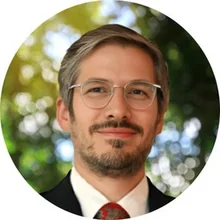
Orion is an award-winning programmer, entrepreneur and technology executive who has spent the last decade in the engine room of major capital projects. He founded Queryon in Washington, D.C. in 2015 with a focus on data analytics and software for the construction industry, starting with bellwether client BP, whose project-controls solutions his team deployed globally, from the North Sea to Azerbaijan to Houston. Today he's a recognized expert in PMO data analytics and project-controls reporting, serving billion-dollar portfolios for owners including BP, Santos, Balfour Beatty and Turner & Townsend, a regular speaker at major industry conferences on AI and analytics in capital projects, and the host of this show.
Why this pairing works
- The other side of the table
- Orion’s listeners mostly sit on the commercial side of a megaproject, with, as he puts it, “a community engagement team that’s maybe five people or two, and they’ve got a little Excel file that’s like permits.” Steve is the first guest who had to win the vote before anyone could price the job: thousands of meetings, a coalition, a contract with the voters.
- Two DC kids
- Steve grew up with the first Washington Metro map; Orion lived in DC too, and his daughter was born there. The map lesson in Chapter 04 lands on both sides of the conversation, and Orion’s read of what Metro did to the city “in intangible ways” is the show’s own case for building the whole thing.
Beyond the PMO
- The builder’s arc
- Founded Introspect Software out of high school; built and sold Design-PT (acquired 2015). His software has run from McMurdo Station to aircraft carriers, with write-ups in Scientific American, CNN and Maxim, and a BP Helios Award.
- The offshore question: how a project with a five-person engagement team and a permits spreadsheet should think about a campaign built on thousands of conversations. ~19:40
- “Estimates aren’t exact, right? So it came to the voters at 5% design.” The question that produces the contract with voters. ~35:10
- Padding: “do we have not enough competition, or do you think it was just the hard reality of concrete costing X?” ~43:10
- Eminent domain and the home as “their biggest asset”: why touching infrastructure touches “this core nerve of American psyche around doing big things.” ~46:40
- Binary thinking: “perhaps the pendulum has swung pretty binary these days,” and the case for being “a little more nuanced.” ~1:06:10
The Road In: DC to Austin on a $100 Scholarship
Orion opens by counting the angles: 30 years in eminent domain, eight years running a Texas Senate office, two terms as mayor of a city that approved a $7.1 billion transit program, a professorship, a memoir. Steve’s own road in is shorter and funnier: a kid from Washington, DC who went to the cheapest law school in the country on a $100 scholarship, meant to leave, and instead watched Austin climb from the 44th largest city in the country to the 10th while its council declined to build.
“And they gave me a $100 scholarship, and the importance of a $100 scholarship was you got in-state residency status. So tuition was $8 an hour, 15-hour semester, cost me 120 bucks. I had a scholarship for $100, so I could afford University of Texas.”Steve Adler · ~1:50
“For probably a couple decades it was the informal policy of many of the council members not to invest in infrastructure on the very mistaken belief that if you didn’t build the infrastructure, people would stop coming. Doesn’t work that way. People come anyhow for all the reasons I did.”Steve Adler · ~3:10
Four angles, one guest
Orion’s framing for the episode: “the academic, courtroom, capital, and city hall perspectives, and an ambitious infrastructure project to learn about.” Project Connect is the case study; governance, policy, legislation and community trust are the subject.
44th to 10th, with nothing built
“Cities just don’t make that kind of jump.” Austin made it anyway, while “what they love most is the Austin they remember from the first day they were here.” The result, in his telling: “Never built out the transportation system, never built out a mass public transit system.”
- The introduction: eminent domain, the Texas Senate, City Hall, the LBJ School and Hot Seat, Hot City, published “a couple months ago.” ~0:40
- “I came here with no intention of staying… But something funny happened in my time in Austin. I fell in love with the breakfast tacos and the music.” ~2:10
- “It was a very creative, welcoming, supportive place. So I just never left.” ~2:20
- “I grew up with that. I lived that. When I became mayor, infrastructure investment was one of the highest priorities.” ~3:40
What Austin Said Yes To
Before the campaign story, the thing itself. Orion asks what Austin voters actually said yes to in November 2020, and the answer is a property tax increase of almost 20% at the city level, about 4% of a household’s total bill, to fund rail, bus rapid transit and the rest of a system that would be built out over time. The structural choice that matters most comes in the same breath: not a bond for a fixed sum, but a levy, raised indefinitely, to build the system and then to run it.
“In 2020, the Austin voters voted to raise their city property taxes by almost 20% in order to fund mass public transit in the city. I think that city property tax is about 20, 25% of the total property tax load, so really it was about a 4% increase in property taxes generally.”Steve Adler · ~4:10
“Rather than voting for a bond which is tied to a specific amount usually to raise the money to build the capital components of a project, this was just to raise property taxes indefinitely so as to provide not only for the capital expenditure but for maintenance and operation over time.”Steve Adler · ~5:00
What the money buys
“To initiate the building out, first of a small part of, but then to expand over time, a public transit rail component, bus rapid transit (BRT), and other aspects of that system.” Phased from the start, and said so: “we were explaining that, trying to be really transparent about that as we went to voters.”
Why a stream, not a sum
Looking across the country: “cities and communities were successful in getting the money to build them. But the cost to operate them became something that became more and more difficult over time.” So the vote priced both, “so that they would recognize what the cost to them would be, not only of building the project, but maintaining and operating the project.”
- Orion sets the table: “What did the Austin voters actually say yes to in November 2020?” ~4:00
- “Certainly novel, hadn’t been done here in Texas that I’m aware of. Certainly hadn’t been done by the city of Austin.” ~5:40
- “A 20% increase in property taxes is not something that happens often. And we did it in November of that first COVID year, which made it just that much more difficult.” ~6:40
Twenty Years of No: 2000, the Red Line, 2014
The 2020 yes was built on two decades of no, and Steve walks through each one as a lesson. A rail plan around 2000 that lost narrowly and was never brought back. A Red Line bought four years later because it was cheap, on a right of way that missed the riders. And the 2014 proposition he was running alongside, which he knew was dead the morning the newspaper printed its route.
“It didn’t lose by a lot. It just lost by a few hundred votes. I think I would have wanted my local government to come back the following year with another vote, tweak the proposal, talk to the voters. They were so close.”Steve Adler · ~8:10
“Unfortunately, it didn’t go where you would put a public mass transit line. The line was already placed, and it wasn’t placed with attracting the greatest ridership as possible.”Steve Adler · ~9:30
“On the front page of the newspaper was a design of the route that was gonna go before the voters, and it showed just that partial route that would actually get initial funding, and it went from point A to point B. And it was not a very long route, and it didn’t connect to anything. It was just there. And I turned to Diane and I said, ‘The election’s over.’”Steve Adler · ~11:40
The Red Line, as he describes it
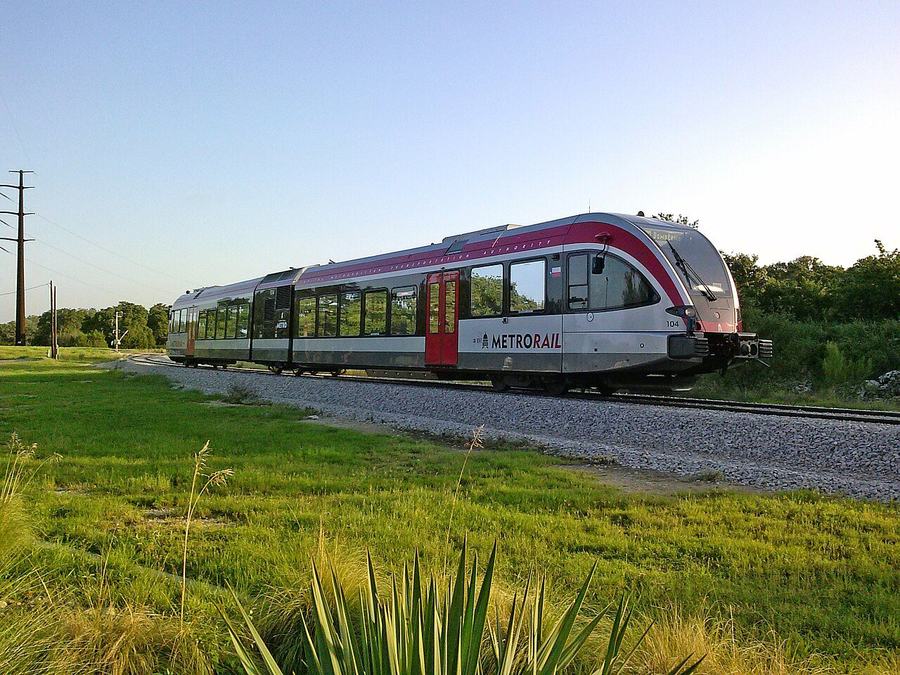
An industrial rail right of way into downtown, “the inexpensive way to start providing for public mass transit.” It “went way over to the east of the city, and then came in downtown, but really missing that development corridor in the center of town.” Instead of a briefcase to show the community, “something that for the next 20 years we were always trying to explain away.”
$650 million in 20 years
His tally for the two decades before he took office: “I think the city cumulatively had done $650 million in capital projects, transportation projects over the prior 20 years.” Keep the number in mind for Chapter 06, when he proposes spending that much in a single bond.
- The 2000 defeat, in his reading: voices saying “Don’t do that in Austin. It’s only going to attract more and more people.” ~8:00
- The cost of waiting: “It would’ve been easier to do because the costs were so much lower 25 years ago than they are today.” ~8:50
- “They did the Red Line, not the smartest move.” ~10:40
- 2014: “It was a proposal, it came late. It was never really vetted or developed by the community.” ~11:10
- “98% of the city looked at that sketch and said, ‘That doesn’t concern me.’” ~12:10
The Metro Map Lesson
The shortest chapter carries the map lesson. Steve grew up in Washington, DC when Metro was being drawn, and the first drawings he saw showed the complete system, decades of it, with everybody on the map. The 2014 Austin sketch showed only what the money would build: in his words, the engineer’s answer to what the voters would approve. He ran on the difference, and made a promise.
“I remember the first time I saw drawings of Metro, it was the complete system. It went everywhere, and it reached way out into everywhere, and it hit everywhere. Now, a lot of that was marked on there, if you read the print, wasn’t gonna happen for 40 years. But everybody was okay with that, so long as that map showed that they were at least part of the design, a part of the vision.”Steve Adler · ~12:20
“This drawing on the front page of the newspaper didn’t see anybody. It was, I think, the engineer’s answer to what are the voters going to approve. And by the way, all we can do is what’s in bold color.”Steve Adler · ~13:00
The two maps, as they existed
The 2014 line · the engineer’s answer
What Proposition 1 put on the ballot, as the City described the route in June 2014: one line from the ACC Highland campus down Airport Boulevard, Red River and San Jacinto, along Trinity Street past the Capitol and the Convention Center, over a new bridge and out East Riverside to Grove. Steve saw a version of it on the front page over coffee: “it went from point A to point B. And it was not a very long route, and it didn’t connect to anything.”
The 1968 map · the whole system

The real thing: WMATA’s Regional Metro System map, adopted March 1, 1968, the 98-mile plan with lines reaching into every corner of the region, most of them decades from opening. Steve was 11. “It went everywhere, and it reached way out into everywhere, and it hit everywhere.” Scan courtesy of DC DOT, public domain, via Wikimedia Commons, where the full-resolution file lives.
- “They could wait until it got to them, as long as they weren’t ignored.” ~12:50
- “Of the 70 to 80 candidates running, I think only two of them supported that proposition… I was one of two, but even I knew that it wasn’t going to pass.” ~13:30
- The promise: “I recognize this is not the plan that people are going to want, so I promise before I leave office to bring something back to the community that it will be able to support.” ~14:20
- “And six years later, after I got elected, so six years and two years into my second term, that’s what we did.” ~14:30
Six Years of Groundwork
Orion asks how the yes was actually assembled, and the answer is six years of work that most project teams never see: thousands of community meetings, a bus agency whose reputation had to be rebuilt before the vote because the vote would be a referendum on it, a booster group outside government copied from Denver, and two lessons watched in real time as Nashville’s transit referendum fell apart.
“Over that six-year period of time, there were thousands of community meetings. What do you want this system to be? Where should it go? What are the benefits of having it? What are the trade-offs in having it? Pretty much anybody who would stand up and raise their hand at the time the election took place was pulled into or made part of that process.”Steve Adler · ~14:50
“This was an organization that nearly went bankrupt, nearly taken over by the state five, 10 years earlier, had a really bad reputation. But we knew that if it came time to a vote it would in part be a referendum on how people felt about CapMetro.”Steve Adler · ~15:50
Nashville, lesson one: the validator
Nashville went to its voters a couple of years earlier with what Steve calls “a really good proposal.” It lost, and its mayor resigned mid-campaign: “she was the face and the embodiment of the project. So we recognized the importance that individual validators would have.”
Nashville, lesson two: the equity wedge
The opposition, “the road warriors folks,” found a spokesman from the Black community to raise equity questions, and “it divided the community in Nashville that should have been a community that was 100%, or near 100%, or overwhelmingly supportive of the project.” Voters were left asking, “Which one is the progressive vote?” Austin’s answer was to put the beneficiaries inside the routing decisions.
- CapMetro before the campaign: it “really did a lot of work on building goodwill in the community,” becoming “much more consumer-centered and responsive, much more in terms of being transparent.” ~15:20
- Denver’s model: citizen advocacy groups outside government, “so we had advocates outside of government that were pushing for these things.” ~16:30
- Buy-in by design: “75% of the affordable housing in our city was within a walkshed of stations for the line.” ~18:50
- “And even though it was a 20% increase in property taxes, it passed with 58% of the vote in November of 2020. We were very proud of that.” ~19:10
Designing for the Vote: Chamber, Equity and the Big Number
The commercial-side question: do you bring the builders and the business lobby in before the vote, or after you have the money? Steve’s answer is that there is no before and after. The glide path to the ballot starts at the first engineering meeting, the affordable-housing question belongs in the room on day one, and the counterintuitive history of Austin’s bond elections says that small asks fail and big ones pass.
“There really shouldn’t be very many engineering decisions that are not informed by what that eventual glide path is going to look like. In fact, I probably should leave out the word eventual. The glide path starts with the initial work.”Steve Adler · ~21:30
“To have somebody at the very first meeting that’s saying, ‘And what percentage of the affordable housing in the city is within a walkshed of what you’ve drawn?’ is a question that oftentimes with engineers doesn’t come up early enough in the process.”Steve Adler · ~22:30
“What makes people vote for big things or big dreams… the belief that government’s going to do something that will change the trajectory of the city. That’s what people want.”Steve Adler · ~24:20
$80 million failed, $60 million passed, wrong lesson
Around 2011 the council lost an $80 million affordable housing bond, came back with $60 million, and won. The council concluded it had asked for too much. Steve’s read: “neither was really big enough to move voters into thinking something transformational would be happening in their city.”
“They all looked at me like I was crazy”
His first bond as mayor: he proposed $700 million for transportation, close to everything the city had spent in 20 years. “Several of them announced at that point they would support me, but nothing over $100 million.” The $720 million bond that went to the ballot was the first not centred on new or wider roads, “and it passed overwhelmingly.”
- Why you cannot wait, after two failed elections: “So people started working together at the very beginning in terms of the routing decisions and where the stations would be.” ~22:00
- “Big projects scare people because they’re a lot of money.” The $80 million bond story. ~23:00
- “Most elections that we’re seeing in today’s world are change elections. Nobody likes the status quo at any point in time.” ~24:30
- After the $720 million bond: “We went back to our voters every two years thereafter with a bond proposition, painting vision and a kind of mission, that kind of Austin exceptionalism.” ~26:00
The Third Leg: Austin Transit Partnership
The chamber of commerce would support a property tax increase, which it loathed, on one condition: the city council must not run a $7 billion program. Out of that came the Austin Transit Partnership, a five-person technocratic body that receives the money and lets the contracts, the third leg of a stool with the council and CapMetro. Steve credits it with the business support that made the vote possible, and is candid about what the arrangement costs in visibility.
“They expressed concerns about having the city council manage a $7 billion project. They were afraid of cost overruns and delays and how contracts would be awarded. They felt a lot more comfortable when we said, ‘What if we empower a group that is technocrats?’”Steve Adler · ~27:20
“It was only because we built in that layer that we ended up getting the chamber support for the project, just barely. But if we hadn’t done that, we wouldn’t have been close.”Steve Adler · ~28:30
The third leg of the stool, as he describes it
The ATP, by his account: “an engineer on it and an accountant on it,” a community activist and representative, “five people, including a city representative and a CapMetro representative, to try to de-politicize the choices,” with a constitution or bylaws to match. It is the body that “would actually be the entity that would get the funding.”
$200 million for housing, inside a transit vote
The equity activists were brought in and the proposal carried “a couple hundred million dollars just to be spent on affordable housing at stations, to be able to buy up land around the stations before the prices escalated.” At the time, “the largest affordable housing bond we’d ever done, or spending approval that we’d gotten from voters, and it was inside of a transportation initiative.”
The trade, by his own account
Good: the people executing are technical and “a little bit more removed from the politics,” so “incidental meddling” is harder. Bad: the leadership is “less known by the public. Probably there’s a feeling that it’s less transparent because it’s a little bit farther away.” Streaming the meetings “is not the same thing as forcing a presence,” and the “jury’s still out to see how that works.”
- Why the chamber mattered: a property tax increase “is something the chamber loathed to support.” ~27:10
- “Let’s agree for a constitution or bylaws for that organization… and how we try to take out politics so we can best do this objectively.” ~28:20
- Build the coalition wide, because “there will be opposition, and you need to have a team in place that’s going to be able to deal with that opposition when it arises.” ~30:50
- Orion on DC: Metro “really changed the way that the city functions in intangible ways.” ~31:10
- “Anything that’s big and has to happen can still happen, but kind of incidental meddling, the kinds of things that sometimes happen in a political process, you’re farther removed from.” ~32:40
Costs Explode, the Levy Holds, and the Contract with Voters
November 2020 was the worst possible month to ask voters for money, and Steve believes Austin’s was the only major transit program approved that cycle. Then supply chains broke. Glass went up 800%, and cities that had won bond elections found the authorized sum could no longer build the project. Austin’s levy survived the same inflation by stretching 15 years. The chapter closes on Orion’s hardest question, how you take a 5% design to the public, and the council’s answer: a contract with the voters.
“Cost of glass went up 800%. Everything costs went way up, as did the cost for this project. And many projects around the country that had been approved in elections authorizing bonds to be issued found themselves in the position where they could issue the bonds and couldn’t come close to the project, so the project was canceled despite a favorable vote in their community because as costs went up, it just wasn’t enough money anymore.”Steve Adler · ~33:50
“In our situation, we were not getting approval for a specific dollar amount. We were getting approved for an annual levy, which meant that we could still raise all the money we had anticipated raising. It might just take us 15 more years.”Steve Adler · ~34:20
“I’m not sure it’s responsible for a government to invest what it costs to go from 5% to 20 or 25% without the voters saying, ‘Yeah, that’s a direction that we want to head,’ especially in a city like Austin, where the voters twice have said, ‘We don’t want to go that way.’”Steve Adler · ~36:10
“If the federal funding does not materialize… we could have said, ‘We’ll come back to the voters.’ We could have said, ‘We’re not gonna be able to build the project, we’ll cancel the project.’ But we didn’t say either of those things. We said, ‘We’ll build however much of the project as we can.’”Steve Adler · ~38:20
The only one, as far as he knows
“We were really excited to be able to pass it in November of 2020. I think ours was the only major project to get approved, that I’m aware of, in that timeframe.”
What the first phase lost
“We lost some elements that I really liked, like going underground downtown. It’s now going to be above ground like in Indianapolis, which is still a wonderful system.” And: “I still believe in the project. I still hope all the phases are eventually done.”
- Orion’s question: “Estimates aren’t exact, right? So it came to the voters at 5% design. How do you politically handle that conversation around the uncertainty?” ~35:10
- What changes after 5%: “you learn more, and where the utility lines are… especially when you’re looking at tunneling under the Colorado River.” ~35:40
- “So you’re caught between a rock and a hard place.” Present the best information at 5%, or spend to get certainty the voters never asked for. ~36:30
- The federal half: “we were counting on federal funding for half of it… and there was nothing guaranteed about that.” ~37:30
- What a contract buys: “It becomes part of the bond or the vote package that I think citizens would have a right to sue on if the council was changing in ways that they had represented otherwise.” ~38:00
- “I think that level of transparency and disclosure enables there to be a meeting of minds that hopefully would help you avoid litigation. Doesn’t always work that way.” ~39:10
Holding the Coalition When the Scope Shrinks
When the tunnel went and the airport line went, how do you keep the coalition together? Steve’s answer separates the people who backed the project for its base reasons, which are just as true at the smaller scope, from the people who wanted a particular feature, some of whom you will lose. Then a rule for the room where the scope is cut: engineers and politicians, neither in control, locked in together until it is worked through.
“The core people that were supporting this project were supporting this project for reasons that are just as true with the changed phasing or changed scope, just as true. We still need public mass transit for all the reasons we needed it before.”Steve Adler · ~39:50
“There were some people that just really wanted to have an underground metro like in Washington, DC, that they saw. And some of those people you’re going to lose because they weren’t supporting it for the base fundamental reasons. They were supporting because they wanted to be able to shop in a mall underground like they can do in Washington, DC.”Steve Adler · ~40:20
“Even if there is an absolutely correct engineering decision to be made, has a lot of weight, but it’s not controlling. Neither is the political answer necessarily controlling. But those two points of view have to lock themselves in a room long enough to work through those kinds of issues.”Steve Adler · ~42:10
The airport line
“It surprises me how much print and space that extension to the airport gets, because I think everybody who never sees themselves on public mass transit in their day-to-day activities think they’ll take it out to the airport maybe.” The numbers, he says, never paid the way the downtown stretch will, “but when you take something like that off the plan, again, it’s a deflating thing for some people.”
What still holds at the smaller scope
“It will still help with accessibility and equity in a community. All those things are true.” The job is “being really diligent and really active” about saying so.
- Orion’s framing: right-sizing with the public and the commercial side, “How do you land that airplane?” ~39:50
- The airport stop, by the numbers: “When you actually run the numbers, it’s really not the numbers that you would need.” ~41:10
- “You make sure that in the room where decisions are being made… it is not just engineers, not just people that are working off of the objective fact, because you still need public support.” ~41:40
The Numbers Came Late
Orion asks the contractor’s question: when the numbers came back high, could the city have cut through the quotes and found someone to build it for $7.1 billion? Steve had left office before the big contracts, but he saw the overrun coming while he was still mayor, and his lesson is about timing. The engineers knew months before City Hall did. From there the conversation widens to cost per mile in America, the eminent domain laws underneath it, and a dinner in China.
“One of the lessons learned was that the engineers and the folks on that side didn’t disclose that information to the political leaders as quickly as they realized it, trying to work through and trying to solve those questions before there was any kind of political disclosure.”Steve Adler · ~44:40
“And sitting on the political side of that, I wish I had gotten that information six months earlier, eight months earlier, because it could have changed the way that I talked about the future of the project, even if I wasn’t explicit in why at that point, because we were uncertain as to what was true or what was not true.”Steve Adler · ~45:00
“And she said, ‘What happens if you win?’… And I said, ‘I’m not exactly sure what you’re asking. If I win, then my client gets paid a fair amount for the property that’s being taken for the project.’ And she looked at me and she said, ‘No, no, no, no. What happens to you if you win?’ was her question.”Steve Adler · ~49:30
Cost per mile, in his reading
Comparing a project here with one elsewhere, from studies he recalls from 2021 or 2022: “a lot of times it was the delays, it was changes in scope, scope creep. It was litigation.” Some of it is the price of an open system, “generally government operates at a more transparent level. Court system is more available to more people.” And still: “it’s absolutely imperative that our governments figure out the way to build the best projects for the least amount of money.”
Eminent domain, here and elsewhere
American law, he says, was written “to provide property owners a more equitable outcome” than in many other places. In parts of Europe, “the condemning authority is allowed to acquire property in the front of its projects because it knows it’s going to enhance value that it can then bank and then sell in order to raise revenue to help build the project. Not so much in this country.”
- Orion: “I feel like there’s a lot of padding in construction… do we have not enough competition, or do you think it was just the hard reality of concrete costing X?” ~43:10
- “I was mayor up until early 2023… But I was not there at the time that they started awarding the really large contracts.” ~43:30
- “It became apparent even while I was mayor that this project was gonna cost a lot more than what we had anticipated, and it was gonna require pretty substantial changes in scope or timing.” ~44:20
- “You’re stewards, trustees of the public coffers, and you wanna do everything you can.” ~45:30
- The China dinner: what the question “What happens to you if you win?” says about retribution, advocacy and why projects there move so fast. ~49:50
- Korea: “such a wonderful system, much of it underground, that really does make you wonder about whether this country can be competitive so long as we can’t deliver that same way.” ~51:10
Trust, Advice and the Book
The advice round, and the episode’s thesis. For mayors: trust is the asset, and people will forgive a decision they dislike if it was made deliberately and they were heard. For engineers and project controllers: there is no engineering solution without politics. For students: decide what is important before the speed of change decides for you. Then the people he follows, the pile of unread novels, and what Hot Seat, Hot City is for.
“People will even give you the benefit of the doubt and support you when you do something they don’t like, if they believe that you were at least acting in a deliberate way and were weighing consequences, heard and did not ignore their point of view.”Steve Adler · ~52:40
“I got in trouble most when I tried to shortcut that. And government is not easy because sometimes if what you’re trying to do is to break inertia, to really bring about much needed but difficult to achieve institutional change, sometimes you need to act fast before you’re able to gain all the support you need.”Steve Adler · ~54:00
“Just that political considerations are as important for engineers as engineers want engineering considerations to be important to politicians.”Steve Adler · ~56:00
“On any of these controversial issues, if your belief is that your side is 100% right and the other side is 100% wrong, then you have work to do, because there is no hard issue where that’s true. Both sides of hard issues have some valid arguments, or they wouldn’t be hard issues.”Steve Adler · ~1:04:50
Fast or slow, but on purpose
“Change happens at the speed of trust. Sometimes change has to happen more quickly than that if you’re actually going to make things change.” He can argue both sides, which is the point: “Make the best decision that you can and make it work, but just don’t let that decision be made for you.”
For students: decide what matters
“Is making money important? Is making your community important? Is your relationship with your kids or your partner important? What is it that is really important? And I would center that in the decisions that they make as they’re seeking change.” Change, he warns, “can be intoxicating.”
Who he watches
He cheats young: Pete Buttigieg, first as mayor of South Bend doing “innovative and creative” capital work on water and sewer, then as Transportation Secretary “at the intersection of engineering and politics” getting the bipartisan infrastructure bill passed; “leaders like Mamdani in New York whose approach to infrastructure comes from a little bit different place,” and “a whole cadre of young mayors and municipal leaders that are doing great things in Los Angeles and Cincinnati and Cleveland.” Above all: “I believe in local government.”
The book
“My book is about my eight years in office,” a chapter per hard issue: race, zoning, homelessness (two), the COVID emergency, the anonymous bomber. The method is the lesson: write the other side’s decent argument into your own case, because then “it would be harder for them to demonize someone who didn’t come to the same conclusion.”
- “They should get my book and read it, number one.” Then: “one of the big lessons over my eight years is just recognizing the value of trust.” ~51:40
- “Even if you ultimately disagree, ‘I know you wanted me to vote this way, I didn’t vote this way, but let me tell you why I didn’t vote this way’, that will still leave you in good standing with most people.” ~53:00
- “There is no such thing as an engineering solution that does not include politics, just as there’s no correct political choice that does not hold on to engineering constraints and opportunities.” ~57:10
- Students and relativity: “they’re riding on that train, so they might not understand that speed in the same way.” ~59:10
- “I’m like eight behind on the novels I wanna read. There’s a big pile next to my bed.” ~1:03:20
- The two takeaways: trust, and “a group of families getting together to try to do something that any one family can’t do alone.” ~1:07:40
- “Go to mayoradler.com. And there’s a way to contact and email me directly on that site.” ~1:08:30
The Big Ideas
Four ideas worth stealing from this episode, each drawn in the shape it was described: a scorecard of four asks, two funding runways, a contract, and a timeline with a gap in it.
Elsewhere · bonds sized to a number
Cities won their elections, then watched supply chains move. Glass went up 800%. They could issue the bonds and still not build, “so the project was canceled despite a favorable vote.”
Austin · an annual levy
Costs rose just the same, but the stream kept coming. “It might just take us 15 more years.” The first phase shrank; the program survived, and the levy pays to operate it, not only to build it.
Contract with the voters
“This is how we’re thinking about this project and this vote and what we’ll do and won’t do.”
- 1The number is a 5% number.Utility lines, a river crossing and everything learned after 5% will move it. “We explained to the voters it was a really high dollar amount.”
- 2Half of it is federal, and none of that is guaranteed.“We also made the citizens aware that we were counting on federal funding for half of it… and there was nothing guaranteed about that.”
- 3If the federal money never comes, we build what we can.“We’ll build as much of it as we can, as fast as we can, in a way that does justice to having a public mass transit system.”
The 5% dilemma
Go to the voters at 5% with your best information, or spend what it costs to reach 20 to 25% without a mandate, in a city that had said no twice. “So you’re caught between a rock and a hard place.”
What the delay cost
Not the fix, the framing. “It could have changed the way that I talked about the future of the project, even if I wasn’t explicit in why at that point.” A mayor can soften what he promises in public months before he can explain why.
The ask, for the project side
Tell the political side when you know, not when you have solved it. The engineers were “trying to work through and trying to solve those questions before there was any kind of political disclosure,” and the solving took the months the mayor needed.
Bookshelf & Links
Everything the episode points to, with real links: the memoir, the project and the bodies that run it, the campuses, the leaders he watches, and where to find the people and the podcast.
The book
- Hot Seat, Hot City
- Hot Seat, Hot City: The Austin Mayor’s Story, Steve Adler (Greenleaf Book Group, August 2026). “They should get my book and read it, number one.” Also at Bookshop.org and Barnes & Noble. ~51:40
- What it is
- “Mostly it’s chapters each devoted to a different kind of policy issue, one on race, one on zoning, two chapters on homelessness, one on emergency with COVID, and a chapter on dealing with the anonymous bomber.” ~1:04:10
- Not read yet
- “I’m like eight behind on the novels I wanna read. There’s a big pile next to my bed.” The shelf behind him on camera is “city policy books and planning books.” ~1:03:20
The project and the bodies that run it
- Project Connect
- projectconnect.com: the program Austin voters approved on November 3, 2020 (Proposition A, 58% yes), light rail plus bus rapid transit and the $300 million anti-displacement fund he describes as “a couple hundred million dollars” for housing at stations.
- Austin Transit Partnership
- atptx.org: “the third leg of the stool,” the independent body that receives the levy and lets the contracts. ~27:50
- CapMetro
- capmetro.org: the bus agency that spent those years “building goodwill in the community” before the vote, and the operator of the Red Line he describes in Chapter 03. ~15:30
People and places he names
- Washington Metro
- The first system map he saw growing up, and the lesson of Chapter 04. ~12:20
- Denver and Nashville
- Denver for the citizen booster group Austin copied; Nashville for the two lessons, the validator and the equity wedge. ~16:10
- Pete Buttigieg
- “I’m a big fan of Secretary Buttigieg, and was when he was mayor of South Bend,” for the water and sewer work there and for the bipartisan infrastructure bill later. ~1:01:30
- Mamdani
- “I’d be looking at leaders like Mamdani in New York whose approach to infrastructure comes from a little bit different place.” ~1:02:20
- Where he teaches
- The LBJ School of Public Affairs at the University of Texas, Huston-Tillotson University and St. Edward’s University: “I’m on three campuses.” ~58:10
The episode
- Listen
- Apple Podcasts · Spotify · YouTube
- The guest
- Steve Adler on LinkedIn · mayoradler.com
- The host
- Orion Matthews on LinkedIn · Queryon
- The show
- themajorprojectpodcast.com: new conversations from the people building projects over US$1 billion.
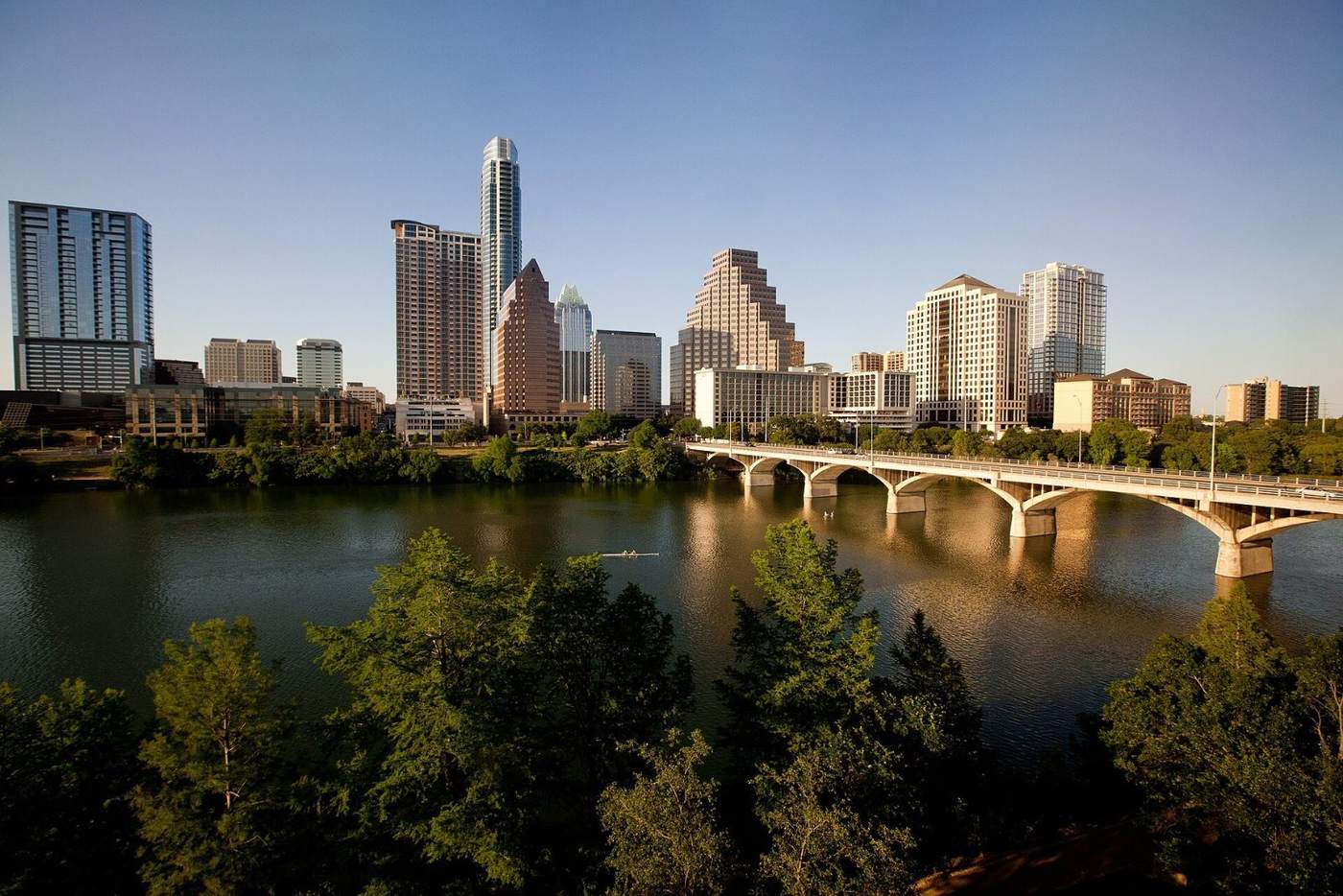
Banner photos, self-hosted: the Austin skyline at sunset in May 2011, the city he watched climb the rankings, by Ed Schipul, CC BY-SA 2.0; and a Capital MetroRail Red Line train approaching Lakeline Station in August 2013, the line he describes as built where the riders were not, by Greg Houston, CC BY-SA 4.0. Both via Wikimedia Commons, cropped and resized. The 1968 Regional Metro System map in Chapter 04 is WMATA’s, scanned by DC DOT and in the public domain (published without a copyright notice), via Wikimedia Commons, resized; the 2014 Austin line beside it is redrawn from the City of Austin’s published route description, not a reproduction of the City’s map.
Quote Bank
The best on-the-record lines from the episode, gathered in one filterable place. “Highlight” marks the lines most worth scrubbing back for; quotes are lightly condensed and timestamps are approximate.
The Road In 0:00–~3:50
- Highlight“They gave me a $100 scholarship, and the importance of a $100 scholarship was you got in-state residency status. So tuition was $8 an hour, 15-hour semester, cost me 120 bucks.”
- “I came here with no intention of staying. But something funny happened in my time in Austin. I fell in love with the breakfast tacos and the music.”
- “When I got to Austin, I think we were like the 44th largest city in the country. When I left office, we were probably 10th largest in the country, 10 or 11, and cities just don’t make that kind of jump.”
- Highlight“It was the informal policy of many of the council members not to invest in infrastructure on the very mistaken belief that if you didn’t build the infrastructure, people would stop coming. Doesn’t work that way.”
What Austin Said Yes To ~3:50–~6:50
- Highlight“In 2020, the Austin voters voted to raise their city property taxes by almost 20% in order to fund mass public transit in the city.”
- “This was just to raise property taxes indefinitely so as to provide not only for the capital expenditure but for maintenance and operation over time.”
- “A 20% increase in property taxes is not something that happens often. And we did it in November of that first COVID year, which made it just that much more difficult.”
Twenty Years of No ~6:50–~12:20
- Highlight“It didn’t lose by a lot. It just lost by a few hundred votes. I think I would have wanted my local government to come back the following year with another vote, tweak the proposal, talk to the voters. They were so close.”
- “Rather than having a wonderful briefcase to show our community, we had something that for the next 20 years we were always trying to explain away as not being an example of what it was that we would do.”
- Highlight“And I turned to Diane and I said, ‘The election’s over,’ because 98% of the city looked at that sketch and said, ‘That doesn’t concern me.’”
The Metro Map Lesson ~12:20–~14:30
- Highlight“Everybody was okay with that, so long as that map showed that they were at least part of the design, a part of the vision. They could wait until it got to them, as long as they weren’t ignored.”
- Highlight“It was, I think, the engineer’s answer to what are the voters going to approve. And by the way, all we can do is what’s in bold color.”
- “I promise before I leave office to bring something back to the community that it will be able to support.”
Six Years of Groundwork ~14:30–~19:20
- “Pretty much anybody who would stand up and raise their hand at the time the election took place was pulled into or made part of that process.”
- Highlight“We knew that if it came time to a vote it would in part be a referendum on how people felt about CapMetro.”
- “She was the face and the embodiment of the project. So we recognized the importance that individual validators would have.”
- “Even though it was a 20% increase in property taxes, it passed with 58% of the vote in November of 2020. We were very proud of that.”
Designing for the Vote ~19:20–~27:00
- “They have a community engagement team that’s maybe five people or two, and they’ve got a little Excel file that’s like permits.”
- Highlight“There really shouldn’t be very many engineering decisions that are not informed by what that eventual glide path is going to look like. In fact, I probably should leave out the word eventual. The glide path starts with the initial work.”
- “Big projects scare people because they’re a lot of money.”
- Highlight“What makes people vote for big things or big dreams… the belief that government’s going to do something that will change the trajectory of the city.”
- “They all looked at me like I was crazy. And several of them announced at that point they would support me, but nothing over $100 million.”
Austin Transit Partnership ~27:00–~33:30
- “They felt a lot more comfortable when we said, ‘What if we empower a group that is technocrats?’”
- Highlight“It was only because we built in that layer that we ended up getting the chamber support for the project, just barely. But if we hadn’t done that, we wouldn’t have been close.”
- “That was the largest affordable housing bond we’d ever done, or spending approval that we’d gotten from voters, and it was inside of a transportation initiative.”
- Highlight“Just putting your meetings on the web so that people can live stream it is not the same thing as forcing a presence.”
Costs, the Levy, the Contract ~33:30–~39:30
- “Cost of glass went up 800%. Everything costs went way up, as did the cost for this project.”
- Highlight“We were getting approved for an annual levy, which meant that we could still raise all the money we had anticipated raising. It might just take us 15 more years.”
- “So you’re caught between a rock and a hard place. Do you do the 5% and then present your best available information to the community, or do you spend the money to get greater certainty and then go to the community, but then answer all the questions about why you were spending that much money without the community telling you you should proceed?”
- Highlight“We could have said, ‘We’re not gonna be able to build the project, we’ll cancel the project.’ But we didn’t say either of those things. We said, ‘We’ll build however much of the project as we can.’”
Holding the Coalition ~39:30–~42:30
- Highlight“They were supporting because they wanted to be able to shop in a mall underground like they can do in Washington, DC. You’ll lose some of those people.”
- “Everybody who never sees themselves on public mass transit in their day-to-day activities think they’ll take it out to the airport maybe.”
- Highlight“Those two points of view have to lock themselves in a room long enough to work through those kinds of issues.”
The Numbers Came Late ~42:30–~51:20
- Highlight“The engineers and the folks on that side didn’t disclose that information to the political leaders as quickly as they realized it.”
- Highlight“I wish I had gotten that information six months earlier, eight months earlier, because it could have changed the way that I talked about the future of the project.”
- “You’re stewards, trustees of the public coffers, and you wanna do everything you can.”
- Highlight“She looked at me and she said, ‘No, no, no, no. What happens to you if you win?’”
- “Big capital projects happen in China and in Asia just so much more quickly and rapidly than they do here.”
Trust, Advice and the Book ~51:20–~1:09:09
- “People will give benefit of the doubt and support to people that they trust, elected leaders that they trust, even without knowing the particulars.”
- Highlight“People will even give you the benefit of the doubt and support you when you do something they don’t like, if they believe that you were at least acting in a deliberate way and were weighing consequences, heard and did not ignore their point of view.”
- Highlight“I got in trouble most when I tried to shortcut that.”
- “Change happens at the speed of trust. Sometimes change has to happen more quickly than that if you’re actually going to make things change.”
- “Make the best decision that you can and make it work, but just don’t let that decision be made for you.”
- Highlight“Political considerations are as important for engineers as engineers want engineering considerations to be important to politicians.”
- Highlight“There is no such thing as an engineering solution that does not include politics, just as there’s no correct political choice that does not hold on to engineering constraints and opportunities.”
- “Everybody has to decide what’s important. Is making money important? Is making your community important? Is your relationship with your kids or your partner important?”
- Highlight“If your belief is that your side is 100% right and the other side is 100% wrong, then you have work to do, because there is no hard issue where that’s true.”
- Highlight“It’s a better way to characterize local government as a group of families getting together to try to do something that any one family can’t do alone.”
- “You give greater grace to your neighbors than you do to your government, unless they’re the same thing.”