
Episode Overview
You can’t automate chaos. That’s the line Hannah Garrett is known for, and the argument this episode tests from both sides of the data center boom. Hannah spent five years on the general-contractor side at Hensel Phelps and Clark, then crossed to the owner side in 2021 for programs and portfolios at Meta, Aligned, Microsoft and now Oracle. The conversation opens on the collision she has watched for a decade, tech companies becoming infrastructure builders and construction companies trying to keep up, and lands on her thesis: AI does not fix an operation, it amplifies whatever operation you already have, so the structure has to come first. Along the way: why delayed projects keep surprising everyone, why the simplest system produces the best data, and what a central workplace for capital projects would look like.
Structure before AI
AI doesn’t fix things, it amplifies them. Map how a project actually runs, standardize what should be standard, then let AI scale it. Applied to chaos, it just makes the chaos faster.
Both halves of the buildout
Field engineer to portfolio leader: Hannah has absorbed change orders in the field and issued them from the owner side, which is why she can name what breaks at the seam between tech and construction.
“The New Career Moat Is Speed”
An 11-minute companion cut: advice for students and career shifters, Hannah’s bookshelf, and the closing riff on why complexity stopped protecting companies and speed took over.
A written companion to the released episode and its bonus cut. Quotes are transcribed from the published audio and lightly condensed for readability (false starts and fillers removed, meaning untouched); timestamps are keyed to the YouTube videos and approximate, and bonus timestamps are marked as such. Biographical details come from Hannah’s public profile and the interview script. Photos: hyperscale data centers in The Dalles, Oregon and Houston, Texas by Tony Webster, and Meta’s Luleå campus by Christopher Down, all Creative Commons; full credits at the end.
Inside the Episode
The main episode follows the show’s four-act arc, from Hannah’s path into data centers, deep into the tech-versus-construction seam and the case for structure, and out through the takeaway and advice for leadership. The bonus cut carries the advice round for students, the bookshelf and the closing riff. The strip maps each chapter’s share of the 53 minutes; timestamps are approximate. Click any block to jump to its chapter.
“AI does not fix things, it amplifies things.” 16:09 and, from Hannah’s writing, quoted back to her on air: “Chaos is a report card that shows the systems were not set up properly before the company expanded.” 21:48
Act II runs long and rich, so the takeaway lands as a compact close; the advice round for students and career shifters opens the bonus.
The Meteor Moment
The welcome, the guest intro, and life in data centers before and after “the meteor.”
Opposite Organisms: Tech vs Construction
Why the two sides think differently, what breaks at the seam, and who actually absorbs a change.
Structure Before AI
The Ford story, “AI amplifies things,” and why chaos is a report card.
Structure Without Bloat
Structure with flexibility, widening the hiring pool, and the administrative load burning PMs out.
Visibility & the Central Workplace
Portfolio health in five minutes, qualitative signals, contractual walls, and the platform that doesn’t exist yet.
The Takeaway & Advice
Pain points as symptoms, and a roadmap for leadership that looks nothing like the last ten years.
The New Career Moat Is Speed
Released as its own cut: the advice round for students and career shifters, the bookshelf, and the closing riff on complexity, speed and the moment.
Each block links to its chapter below: the map mirrors how the released episode flows.
The Guest · Hannah Garrett

Hannah has spent ten years managing complex portfolios in fast-moving environments, and she’s done it from both sides of the data center buildout. She came up through the general-contractor world (Hensel Phelps, Clark Construction), ran projects at The Hanover Company, then crossed to the owner side in 2021: global programs and process at Meta, technical program management at Aligned Data Centers, AI data center portfolios at Microsoft, and now strategic portfolio management at Oracle. Her focus: defining how portfolios operate, aligning teams around clear ownership, and keeping execution consistent as scale increases.
“You can’t automate chaos.”Hannah’s line, the post that sparked this episode
Career journey
Credentials & recognition
- Education
- B.S. Construction Engineering, San Diego State University.
- Certifications
- LEED AP Building Design + Construction; Commercial Real Estate.
- Honors
- Commercial ASC Competition.
Writing & voice
- The Bigger Vision
- Her Substack on operating models and AI readiness: thebiggervision.substack.com. “Where I break down macro perspectives within my industry and in general.”
- Known for
- “You Can’t Automate Chaos,” “Complexity is the Enemy,” the four-step portfolio takeover, and the tech-vs-construction thesis this episode is built on.
- Find her
- LinkedIn: /in/hannahegarrett · “send me a note.”
“I’m one of those weird people that loves entering something that I’m completely clueless on… You just have to solve the puzzle in chunks.” 37:13
The Host · Orion Matthews

Orion is an award-winning programmer, entrepreneur and technology executive who has spent the last decade in the engine room of major capital projects. He founded Queryon in Washington, D.C. in 2015 with a focus on data analytics and software for the construction industry, starting with bellwether client BP, whose project-controls solutions his team deployed globally, from the North Sea to Azerbaijan to Houston. Today he’s a recognized expert in PMO data analytics and project-controls reporting, serving billion-dollar portfolios for owners including BP, Santos, Balfour Beatty and Turner & Townsend, a regular speaker at major industry conferences on AI and analytics in capital projects, and the host of this show.
Why this pairing works
- Same seam
- Orion builds the reporting and data systems that capital portfolios run on; Hannah runs the portfolio programs that need one. The central workplace she has never seen built is the thing his work keeps circling.
- The AI thread
- Orion plays the techie on purpose (5D BIM the whole data center, let AI forecast everything in real time) and Hannah answers with structure first. Both work the AI seam daily, from opposite ends of it.
Beyond the PMO
- The builder’s arc
- Founded Introspect Software out of high school; built and sold Design-PT (acquired 2015). His software has run from McMurdo Station to aircraft carriers, with write-ups in Scientific American, CNN and Maxim, and a BP Helios Award.
The Meteor Moment
Hannah’s path in, and what the boom looked like from inside it. Five years covering every side of delivery on the general-contractor side (pre-construction with developers through managing work in the field), then a jump to Meta’s data center portfolio in 2021, “before data centers were really cool.” Then the world noticed.
“It definitely felt like a meteor overnight… Before, it was like, ‘Oh, I work on data centers,’ and they’re like, ‘What is a data center?’, and you have to explain the cloud.”Hannah Garrett · 2:02
Was the industry prepared? “Absolutely not.”
“It’s really tech companies taking on a bigger role in infrastructure and construction: that’s a big jump, they’re so different. And it’s construction companies trying to keep up with tech. It’s a massive change, and it felt like overnight.” 2:32
What the field taught her: change management
“When you’re in construction, you see all the downward impacts of that change: everything’s interconnected on a project… I’m really glad I got to see the extent of that and then join the owner side, because oftentimes on the owner side you don’t see the full impacts.” 3:32
- The guest intro lands the both-halves framing: GC side at Hensel Phelps and Clark, owner side at Meta, Aligned, Microsoft, Oracle. 0:32
- Life before the boom: explaining the cloud at dinner parties; life after: “internally, it’s just gotten a little more chaotic, because it’s so busy.” 2:14
- Why she started writing: “All these themes we’re going to talk about today, I’m super passionate about, but no one’s really talking about them.” 4:37
Opposite Organisms: Tech vs Construction
The episode’s frame. Tech is built to pivot; construction is built to reduce risk. Both are rational, and they are now jointly delivering billions of dollars of infrastructure. This chapter unpacks what actually breaks at the seam: who absorbs a change, whose language wins, and why the delivery team keeps taking the blame.
The tech organism
- Highly incentivized to out-innovate: pivoting and re-orgs are the culture, flexibility is a requirement
- Works in code and software: you can go back and edit, so change feels reversible and cheap
- “One side’s culture: change everything, constantly.” · from Hannah’s writing
The construction organism
- The job is to reduce risk: quality, schedule, cost; a defined way to do everything
- A physical product: mistakes are expensive and hard to unwind, so standards exist to eliminate risk
- “The other side’s culture: change is risk, minimize it.” · from Hannah’s writing
“Construction is kind of a dinosaur because it’s very reliant on experience, because there is a lot of risk. It’s a physical product. It’s very hard to fix mistakes… You need that standard to exist in order to eliminate the risk, because the risk is very real on the construction end.”Hannah Garrett · 6:05
- Is the agile mindset right for this world? “There’s a lot of ego involved… they did build amazing things, and they have billions of dollars backing them. But they’ve never worked with physical products like this, where there is real consequence to change, and things are starting to break.” 7:34
- Why delayed projects keep surprising everyone: “The people actually doing the work have very little say when a change comes down… those conversations are not happening. So the product is delayed, and everyone’s looking at the delivery folks like they did something wrong, when in reality, this conversation was never had.” 9:56
- The language gap: “risk” and “change order” are heavy words in construction and light ones in software. “This is a big gap in our industry… I’m just not sure who’s going to be the first one to have that conversation.” 11:42
- Her fix for the whiplash effect: both sides own change; tech runs real change management (“if this delays the project, is this change still worthwhile?”), delivery beefs up how changes get processed. “If you have a structure in place, it’s a lot easier.” 12:37
The “roughly half of U.S. data centers slated to open this year are delayed or cancelled” figure comes up at 8:59 as a widely circulated industry estimate, cited from memory in conversation. Treat it as directional rather than precise.
Structure Before AI
Orion channels the techie (“we’ll 5D-BIM the whole data center, build a world model, let AI forecast everything in real time”), and Hannah answers with the episode’s central argument: AI doesn’t fix an operation. It amplifies whatever operation you already have.
“AI does not fix things, and I think that’s a misconception. It doesn’t fix things, it amplifies things… So it’s really important to set the structure first.”Hannah Garrett · 16:09
The cautionary tale
Ford automated quality control, laid people off, then rehired the engineers because the automation missed the usual culprits. “They’re trying to simplify it before they understand it.” 15:32
The reality of the build
By “structure” she means the operational structure: what actually goes into building a data center: 40-plus stakeholders, different SMEs per system, all interconnected. Understand it before you automate it. 16:09
The playbook
“Sit down with some of the best PMs and understand how they run a project start to finish… you can boil it down to a science”: stages, stakeholders, change management, escalations. Map it end to end. 17:28
- What she hires for in this environment: “Competency is underrated… take initiative, drive things home, be curious, being able to learn and progress easily.” 18:29
- On Dorsey’s “hierarchy is an obsolete information-routing protocol”: she can see the central-model future, but “I always call project management the domino for AI: they handle so much complexity. The models definitely have to get better… but it’s definitely possible.” 19:56
- How companies get amplification backwards: “They’re handing it to their employees and saying, ‘Hey, use this however you can,’ and setting aggressive goals… people spin off in silos. They’re accelerating something, but you don’t know that that something is meaningful.” 20:48
“With five projects you can communicate with everyone involved. When you 10x that to fifty, communication between all those teams is impossible… If companies don’t insert a system before they have that scale, it’s chaos: people are burnt out, they’re in a ton of meetings, you’re having billion-dollar decisions determined in Slack channels. If you implement a good system before you grow, you can grow and scale easily without adding risk.”Hannah Garrett · 22:03 · “chaos is a report card”
Structure Without Bloat
The devil’s-advocate chapter, asked from our audience’s side of the table: project controls already documents everything. Isn’t that exactly how you end up with bureaucratic complexity? Hannah’s answer is a line to keep: standardize everything that should be standard, so people have energy left for what genuinely requires judgment.
“It’s all about meeting in the middle, structure with flexibility. There should be one way to hold meetings, one way to take meeting notes… Every time you have to think, ‘How do I want to do this?’, that creates a decision, and it repeats on every project. Create a standard for everything that should be standardized, so you have more energy to focus on what requires that flexibility.”Hannah Garrett · 23:30
The studs-and-drywall rule
“You need to put the studs up before you put the drywall: that’s a standard, it’s always going to be that way. But depending on the code, or what the owner wants, the type of drywall might change. Structure, with a little flexibility.” 24:20
Experience vs framework: “both are right”
“Right now, experience is leading the way… But if you can boil it down to more of a science and reduce some of that complexity, you can hire people who are still as competent but don’t have as much experience, because the roadmap is laid out for them. Widen the hiring pool.” 25:43
- The talent cliff is real: a hollowed-out middle, few juniors entering, and heavy turnover. “We have to learn how to teach the new generation in a different way than we’ve ever done before… A good PM gets burnt out and leaves a huge hole, a lot of risk for the business.” 27:12
- Why PMs burn out: “You’d be surprised how much administrative load they’re taking on: reporting, status updates, chasing people for updates… And you’d think, ‘Oh, have we not automated this?’ And we haven’t.” 28:16
- Orion’s EHR analogy: doctors who retired rather than become documentation clerks. The same burden is landing on PMs now. Hannah: “I think you nailed it.” 29:49
- The tool paradox: delivery teams beg “no new tools, please” while leadership buys systems that track every data point. “It sounds counterintuitive, but if you simplify the system, you’re going to get better data… an overly robust system that tracks everything gets you a bunch of data that never gets updated.” 30:27
Visibility & the Central Workplace
The longest and most concrete chapter of the episode: 18 minutes on what leaders should actually be able to see. Portfolio health in five minutes, qualitative signals over vanity KPIs, the contractual walls nobody can tear down, the internal walls everybody could, and the central platform Hannah has never seen built.
“We keep going back to, ‘We just need a new dashboard to show this and this’, but we’re ignoring that it’s the quality of the data that’s missing. A new dashboard gets spun up every day. At the end of the day it’s the reliance of the data, and tracking what’s important.”Hannah Garrett · 33:27
Her four steps for taking over a portfolio
1 · Live source of truth
One central place showing every project, its lifecycle stage and its risks: live, not assembled for a meeting.
2 · Define “perfect”
Write the standard for what perfect looks like, then have PMs gap-check their actuals against it.
3 · Look for context
Where are unexpected costs coming from? Which teams are falling behind? What decisions are being avoided?
4 · Lessons, fed back
Pull lessons learned into the tracking system as checkpoints and prompts, so the roadmap improves itself.
From Hannah’s writing, walked through on-air at 37:05–40:41 · “You have to understand the process end-to-end, get to know everyone involved, then find the gaps… If you continuously do that, you become a great PM.”
- Measure the qualitative: “How many of your PMs are quitting? How much repeat business are you getting? Are client calls actually going well? It’s a sense of ease versus a sense of chaos and tension.” 35:16
- The contractual walls: owner → leaseholder → general contractor. “There’s no contract between the GC and the owner… they’re not privy to that information. I do think it’s going to limit us, but I don’t see a way around it.” 41:54
- The walls we could remove: “Take one project at an owner: physical security, architectural, delivery, all these internal teams, and internally they have no visibility into what the other teams are doing… We should have extreme transparency amongst internal teams before we even talk about external ones.” 42:14
- Why the simple fix never ships: “We like making incremental improvements, but we don’t want to shake the boat… it’s a huge change, and I don’t think anyone wants to be the one to make it.” Plus the quiet ego tax: “How stupid would they feel coming up with the idea to use this very simple tool? It’s not an ego thing, but it is.” 44:53
- Orion’s confession from the controls side: RBS, WBS, CBS, OBS; “at some point you step back and you’re just like, what have we done? We’ve created all this entropy, and we’re just trying to build five data centers.” Hannah: keep the skeleton whole, drop the side missions: “‘We need a RACI for this’: if the process is built out start to finish, a lot of that is really not needed.” 46:26
- Where it lands: keep construction’s hierarchy where risk demands it, take tech’s leanness everywhere else, “finding the best of both worlds and combining them.” 48:36
“When I was at Meta, what we realized very quickly is there’s no good way to see the status of all your projects in one place. There’s no central platform. And this is what I will harp on until the day that I die: you need a central workplace… I really like simple systems, Asana, Monday; they can be set up to handle the complexity. What’s important is that it’s all in one place. And that does not exist today. I’ve never seen it done.”Hannah Garrett · 43:29
The Takeaway & Advice
Acts III and IV arrive compressed and strong: the one idea to leave with and what leadership should do on Monday. The direct advice for students and career shifters, the audiences this show is built for, runs as the opening of the bonus cut.
“Pain points are a symptom of something bigger going on. It’s like having a stomachache: you don’t just continue to have a stomachache, you figure out what’s causing it and get to the root of the issue. And it’s more important than ever, because AI is going to come in and amplify everything: it’s going to exacerbate the issues you already have. Now’s the time to drive a more strategic approach to operations and clean up your systems.”
Be bold, top-down
“Don’t shy away from those conversations, and be bold about it. This is not the time to try and make everyone happy. Come up with a strategic roadmap that looks nothing like the past ten years… The solution has to be different than it ever was before.” 51:45
The advice round
The questions for students and career shifters open the 11-minute bonus cut, “The New Career Moat Is Speed,” quoted in the bonus section below.
- Orion’s synthesis: “clean up our systems” has been a 20-year drumbeat nobody acted on because nothing broke. “AI is going to force that change, and it’s going to have to happen fairly rapidly.” 50:06
- Hannah on where change starts: “It wasn’t a priority in leadership’s eyes, and it has to be top-down… to completely shift the way that everyone else thinks.” 50:37
The Big Ideas
Three ideas carry the episode. Sketched here the way a portfolio room would whiteboard them; the third one belongs to the bonus cut.
AI does not fix an operation. It scales whatever is already there: a mapped, standardized way of running projects, or fifty projects’ worth of chaos in Slack channels.
Faster chaos. Tools handed to employees with aggressive goals: “people spin off in silos. They’re accelerating something, but you don’t know that that something is meaningful.”
The payoff quadrant. Understand the build end to end, set the standard, then let AI scale what already works.
The report card: burnt-out people, a ton of meetings, “billion-dollar decisions determined in Slack channels.”
Solid but manual. Good PMs carrying the administrative load of reporting, status updates and chasing people for updates.
Leadership buys the system that tracks every data point; the delivery team begs “no new tools, please.” Both are describing the same failure.
The overly robust system
- Tracks everything, so it asks for everything
- Every project decides again how to run a meeting or take notes
- “A bunch of data that never gets updated”
The simple central system
- Studs before drywall: the standard never changes, the drywall can
- Painless to update, so it gets updated
- Energy left for the decisions that need judgment
Complexity used to protect incumbents. AI can now read the complexity, so the advantage moves to whoever moves fastest.
The old moat: complexity
- “You can’t understand what we do, how will you compete?”
- Layers of middle management, each one a delay
- Six months to get through the approvals
The new moat: speed
- A founder with a laptop and Claude, done by lunchtime
- The solutions that worked yesterday will not work today
- Test the tool yourself, then decide
From the Bonus Episode
A companion cut released alongside the main episode: the advice round for students and career shifters, Hannah’s bookshelf, and the wrap-up riff that refused to wind down, in which a bookshelf question reignites the conversation into its best stretch: complexity used to be a moat, AI drained it, and the new moat is speed. Quotes are transcribed from the bonus and lightly condensed; timestamps are approximate.
“Complexity has been companies’ moat: ‘you can’t understand what we do, how will you compete?’ Now you have AI, so you can figure it out. That’s no longer a moat. I think now the moat is speed, and ironically, the faster you are, the less complexity you have.”Hannah Garrett · bonus · 5:27
Don’t fear AI: wield it
“Get to know it. It’s a massive tool for you… use it for your passion projects, use it at work, and really use it as your biggest pitch. There’s a huge opportunity to excel in the workplace right now if you can grasp it.” bonus · 0:40
The door is open
“There’s a ton of opportunity. If you’re really good at seeing things end-to-end and managing chaos, we’re definitely looking for you; I’ve never seen this side hire so much.” bonus · 1:15
The org-chart tax
“Look at how many layers of middle management. That’s complexity. That’s reducing speed… You have founders with their laptop and Claude getting things done by lunchtime, while it’s taken these companies six months just to get through the layers of approval.”
bonus · 7:19
Her habit: action beats research
“I don’t really believe what I hear; I’ll just give Claude a new prompt and see what happens. We live in an era where action beats research sometimes. Just test it out.”
bonus · 2:09
The story she loves
Ben Horowitz realizing his product managers all worked differently, so he wrote one document, “Good Product Manager / Bad Product Manager.” “It was basic. It was direct. It was transformative… Back to basics is definitely a theme for me.”
bonus · 4:07
The moment
“The solutions that worked yesterday are not going to work today, so experience is no longer a barrier.”
bonus · 9:50 · her answer to Orion’s meditation on living through an in-between moment in history
“My Substack is The Bigger Vision; that’s where I break down macro perspectives within my industry and in general. But also just follow me on LinkedIn, send me a note. I do have some cool things coming up.” bonus · 10:40
Bookshelf & Links
Everything recommended in the episode and the bonus, plus where to find the people and the show.
Hannah’s bookshelf
- Leadership
- The Hard Thing About Hard Things · Ben Horowitz. “A no-BS way of going about being a CEO… every manager should read it and see themselves as their own CEO.”
- Management
- “Good Product Manager / Bad Product Manager” · Ben Horowitz. The one-document intervention she keeps coming back to.
- Entrepreneurship
- Shoe Dog · Phil Knight. “How you handle that amount of chaos.”
- AI
- The Rundown AI · the newsletter she uses to stay current, paired with her better advice: test the tools yourself.
- Her writing
- The Bigger Vision · Hannah’s Substack on operating models and AI readiness, home of “You Can’t Automate Chaos” and “Complexity is the Enemy.”
- Host pick
- The Innovator’s Dilemma · Clayton Christensen, raised by Orion when the conversation turned to why incumbents struggle to change.
The episode
- Listen
- Episode page (Podbean) · Apple Podcasts · Spotify
- The guest
- Hannah Garrett on LinkedIn · “send me a note.” · The Bigger Vision
- The host
- Orion Matthews on LinkedIn · Queryon
- The show
- themajorprojectpodcast.com · new conversations from the people building projects over US$1 billion.
- The Bookshelf
- The Major Project Bookshelf · every recommendation from every episode, with the reasoning in the speakers’ own words.
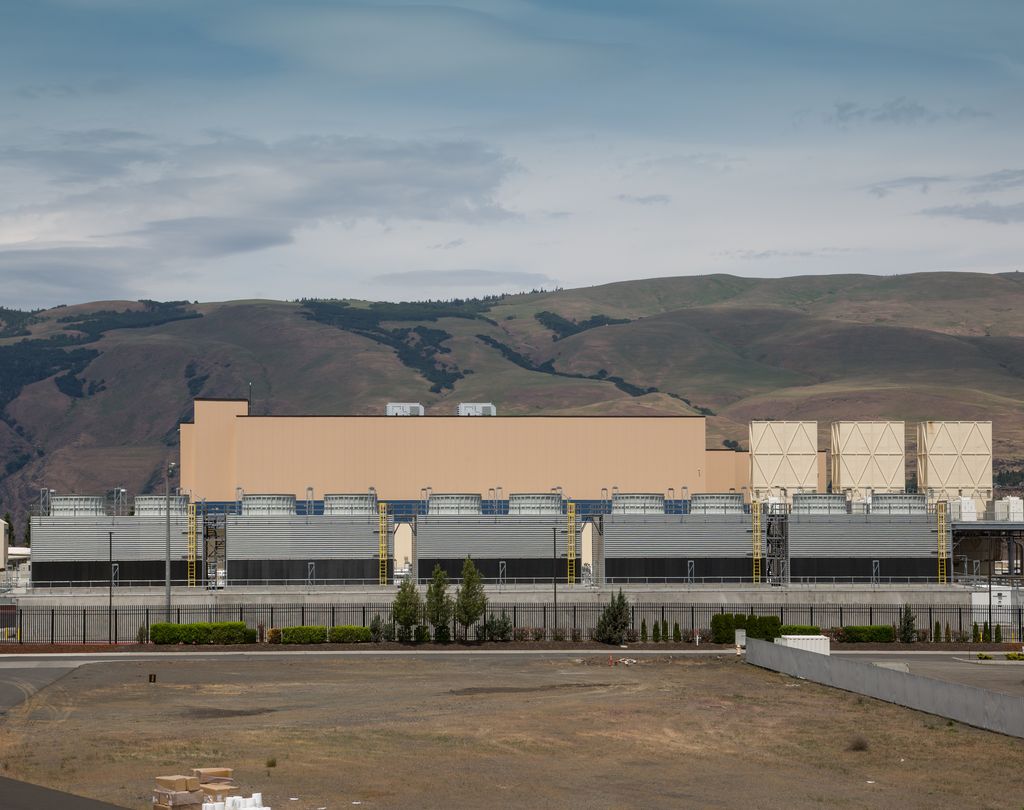
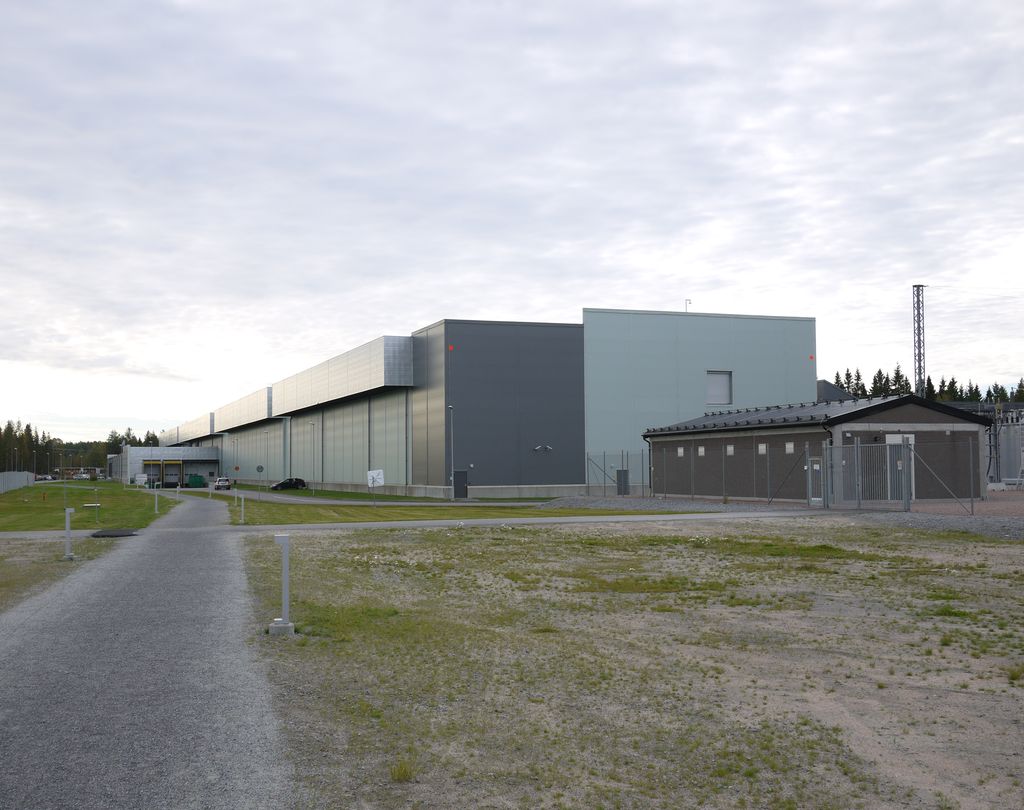
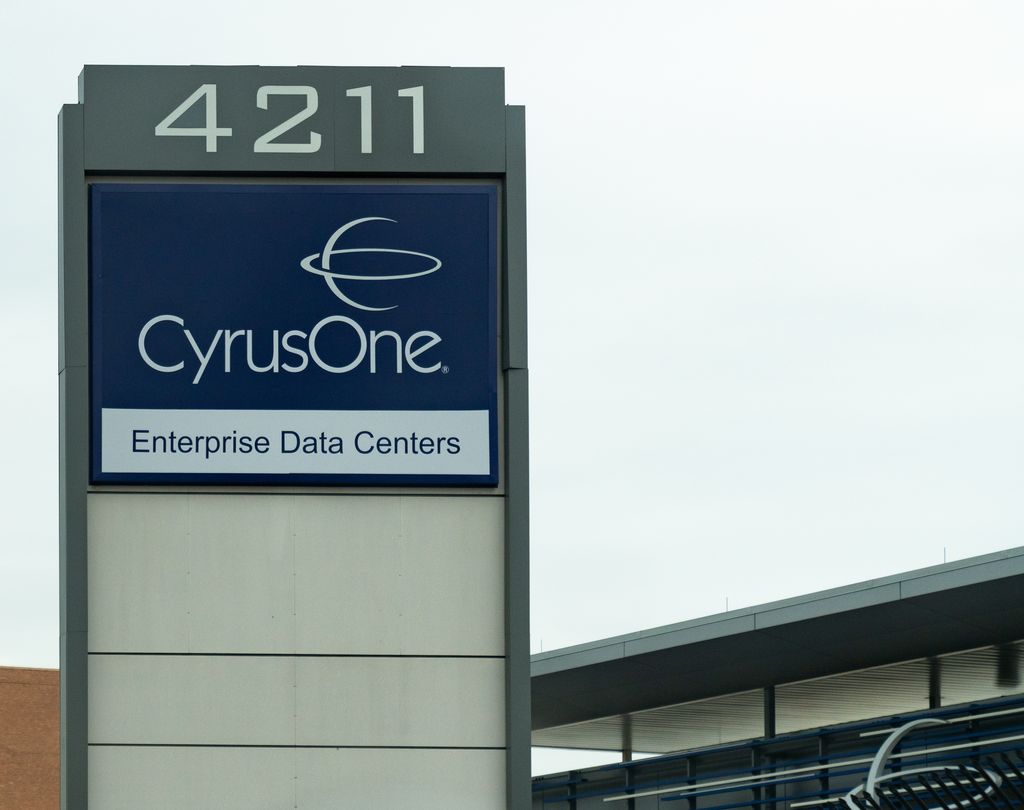
Banner photographs of hyperscale data centers: Google data center, The Dalles, Oregon (2015) · Facebook (Meta) data center, Luleå, Sweden (2016) · CyrusOne data center, Houston, Texas (2019). Google’s The Dalles campus and CyrusOne’s Houston facility by Tony Webster, licensed CC BY 2.0; Meta’s Luleå data center by Christopher Down, licensed CC BY 4.0. All via Wikimedia Commons.
Quote Bank
The best on-the-record lines from the episode and its bonus cut, gathered in one filterable place. “Highlight” marks the lines most worth scrubbing back for; quotes lightly condensed, timestamps keyed to the published videos and approximate.
The Meteor Moment 0:32–5:18
- Highlight“It definitely felt like a meteor overnight… Before, it was like, ‘Oh, I work on data centers,’ and they’re like, ‘What is a data center?’, and you have to explain the cloud.”
- “Was the industry prepared? Absolutely not… It’s tech companies taking on a bigger role in infrastructure and construction, and construction companies trying to keep up with tech.”
- “All these themes we’re going to talk about today, I’m super passionate about, but no one’s really talking about them.”
Opposite Organisms 5:18–14:11
- Highlight“Construction is kind of a dinosaur because it’s very reliant on experience, because there is a lot of risk. It’s a physical product… You need that standard to exist to eliminate the risk, because the risk is very real.”
- “They did build amazing things, and they have billions of dollars backing them. But they’ve never worked with physical products like this, where there is real consequence to change, and things are starting to break.”
- “The people actually doing the work have very little say when a change comes down… So the product is delayed, and everyone’s looking at the delivery folks like they did something wrong, when in reality, this conversation was never had.”
- “What we’re having is a whiplash effect… If you have no structure, it takes a long time for changes to get processed. If you have a structure in place, it’s a lot easier.”
Structure Before AI 14:11–23:11
- Highlight“AI does not fix things, it amplifies things. If you give it a good prompt, it’ll give you really good information back… So it’s really important to set the structure first.”
- Highlight“They ended up rehiring a lot of the engineers because the automation was not catching the usual culprits… They’re trying to simplify it before they understand it.”
- “I always call project management the domino for AI: they just handle so much complexity.”
- “Competency is underrated… take initiative, drive things home, be curious.”
- Highlight“If companies don’t insert a system before they have that scale, it’s chaos: people are burnt out, they’re in a ton of meetings, you’re having billion-dollar decisions determined in Slack channels.”
Structure Without Bloat 23:11–32:55
- Highlight“Create a standard for everything that should be standardized, so that you have more energy to focus on what requires that flexibility.”
- “You’d be surprised how much administrative load they’re taking on: reporting, status updates, chasing people for updates… And you’d think, ‘Oh, have we not automated this?’ And we haven’t.”
- “It sounds counterintuitive, but if you simplify the system, you’re going to get better data.”
- “If you can boil it down to more of a science and reduce some of that complexity, you can hire people who are still as competent but don’t have as much experience… Widen the hiring pool.”
Visibility & the Central Workplace 32:55–48:58
- Highlight“There’s no good way to see the status of all your projects in one place… This is what I will harp on until the day that I die: you need a central workplace.”
- “A new dashboard gets spun up every day… when at the end of the day, it’s really the reliance of the data, and tracking what’s important.”
- “We should have extreme transparency amongst internal teams, at least, before you start talking about external teams.”
- “At some point, you step back and you’re just like, what have we done? We’ve created all this entropy, and we’re just trying to build five data centers.”
- “Make sure the skeleton is whole… ‘Oh, we need a RACI for this’: if you have the process built out start to finish, a lot of that is really not needed.”
The Takeaway & Advice 48:58–52:57
- Highlight“Pain points are a symptom of something bigger going on… AI is going to come in and amplify everything: it’s going to exacerbate the issues you already have. Now’s the time to clean up your systems.”
- “Come up with a strategic roadmap that looks nothing like the past ten years… The solution has to be different than it ever was before.”
The New Career Moat Is Speed bonus · 0:00–11:25
- “Don’t fear AI, get to know it… use it for your passion projects, use it at work, and really use it as your biggest pitch.”
- Highlight“Complexity has been companies’ moat… Now you have AI, so you can easily figure it out. That’s no longer a moat. I think now the moat is speed, and ironically, the faster you are, the less complex.”
- “You have founders with their laptop and Claude getting things done by lunchtime, while it’s taken these companies six months just to get through the layers of approval.”
- “The solutions that worked yesterday are not going to work today, so experience is no longer a barrier.”
- “It was basic. It was direct. It was transformative… Back to basics is definitely a theme for me.”